
Wearable Health Data
How Consumer Wearables Will Impact Diabetes Management
Dexcom's stake in Oura and Abbott's investment in Whoop signal that glucose and activity data are converging. One of our consultants, who lives with type 1 diabetes, unpacks why this matters – and the three challenges (data, regulation, and reimbursement) that stand between this convergence and real impact for patients.

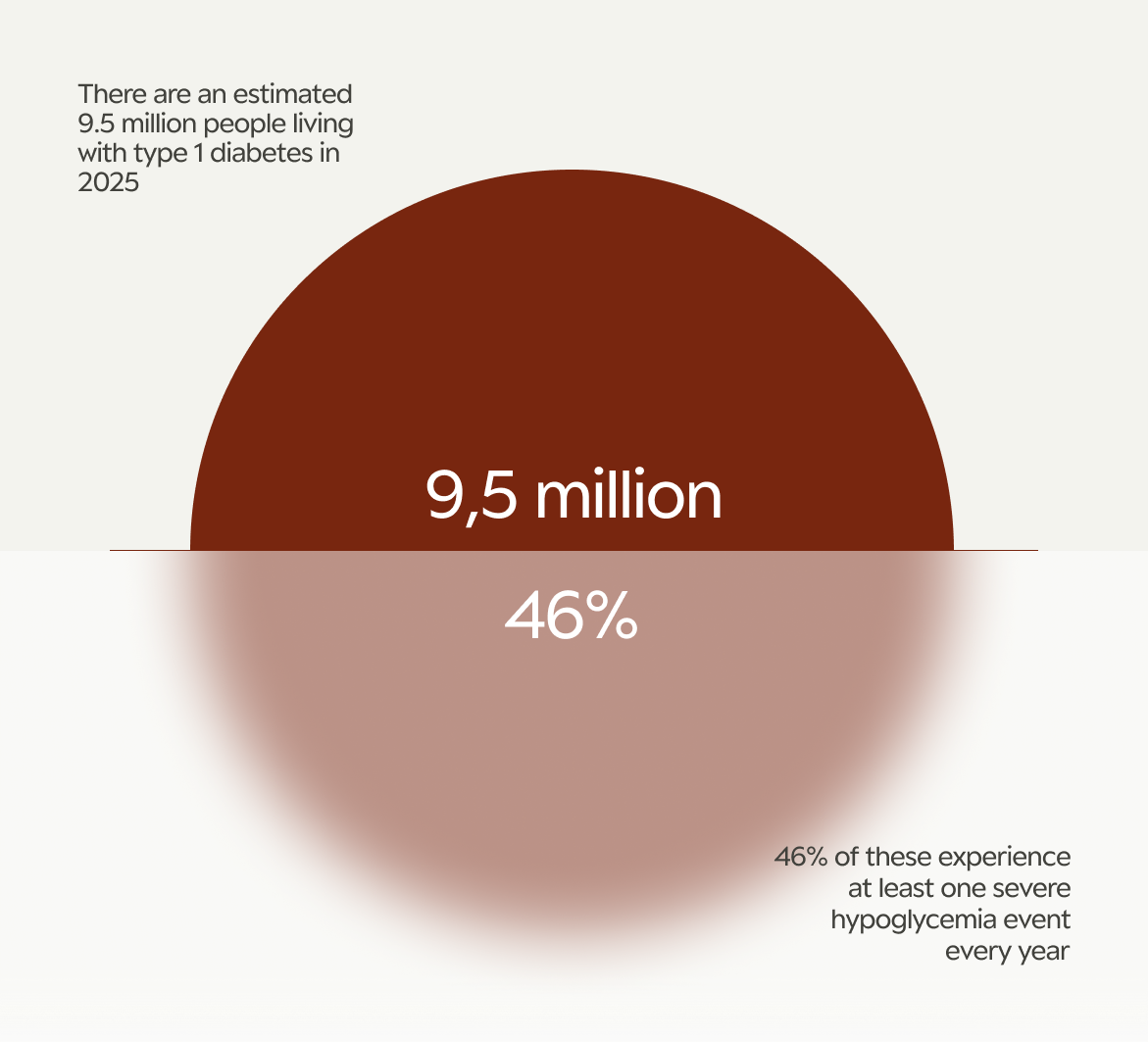
An estimated 9,5 million people are living with type 1 diabetes in 2025, and up to 46% of these experience at least one severe hypoglycemia event (dangerously low blood sugar) every year. Managing diabetes has become easier over the last few decades – most recently through continuous glucose monitors (CGMs) and semi-automatic insulin pumps that integrate and work together to regulate blood sugar levels. But even with the best technology available today, the patient burden remains high, as patients must still constantly account for meals and activity to stay in range. However, this may change as the field evolves with new types of players.
Over the past two years, two giants of continuous glucose monitoring have each taken a stake in a health and fitness consumer wearable. In this article, I unpack why this is exciting from my own perspective as a type 1 diabetic using both an Abbott device for glucose tracking and a Whoop for health and fitness tracking.
An estimated 9,5 million people are living with type 1 diabetes in 2025, and up to 46% of these experience at least one severe hypoglycemia event (dangerously low blood sugar) every year. Managing diabetes has become easier over the last few decades – most recently through continuous glucose monitors (CGMs) and semi-automatic insulin pumps that integrate and work together to regulate blood sugar levels. But even with the best technology available today, the patient burden remains high, as patients must still constantly account for meals and activity to stay in range. However, this may change as the field evolves with new types of players.
Over the past two years, two giants of continuous glucose monitoring have each taken a stake in a health and fitness consumer wearable. In this article, I unpack why this is exciting from my own perspective as a type 1 diabetic using both an Abbott device for glucose tracking and a Whoop for health and fitness tracking.
An estimated 9,5 million people are living with type 1 diabetes in 2025, and up to 46% of these experience at least one severe hypoglycemia event (dangerously low blood sugar) every year. Managing diabetes has become easier over the last few decades – most recently through continuous glucose monitors (CGMs) and semi-automatic insulin pumps that integrate and work together to regulate blood sugar levels. But even with the best technology available today, the patient burden remains high, as patients must still constantly account for meals and activity to stay in range. However, this may change as the field evolves with new types of players.
Over the past two years, two giants of continuous glucose monitoring have each taken a stake in a health and fitness consumer wearable. In this article, I unpack why this is exciting from my own perspective as a type 1 diabetic using both an Abbott device for glucose tracking and a Whoop for health and fitness tracking.
New Players Entering The Field
An estimated 9,5 million people are living with type 1 diabetes in 2025, and up to 46% of these experience at least one severe hypoglycemia event (dangerously low blood sugar) every year. Managing diabetes has become easier over the last few decades – most recently through continuous glucose monitors (CGMs) and semi-automatic insulin pumps that integrate and work together to regulate blood sugar levels. But even with the best technology available today, the patient burden remains high, as patients must still constantly account for meals and activity to stay in range. However, this may change as the field evolves with new types of players.
Over the past two years, two giants of continuous glucose monitoring have each taken a stake in a health and fitness consumer wearable. In this article, I unpack why this is exciting from my own perspective as a type 1 diabetic using both an Abbott device for glucose tracking and a Whoop for health and fitness tracking.
New Players Entering The Field
An estimated 9,5 million people are living with type 1 diabetes in 2025, and up to 46% of these experience at least one severe hypoglycemia event (dangerously low blood sugar) every year. Managing diabetes has become easier over the last few decades – most recently through continuous glucose monitors (CGMs) and semi-automatic insulin pumps that integrate and work together to regulate blood sugar levels. But even with the best technology available today, the patient burden remains high, as patients must still constantly account for meals and activity to stay in range. However, this may change as the field evolves with new types of players.
Over the past two years, two giants of continuous glucose monitoring have each taken a stake in a health and fitness consumer wearable. In this article, I unpack why this is exciting from my own perspective as a type 1 diabetic using both an Abbott device for glucose tracking and a Whoop for health and fitness tracking.
New Players Entering The Field
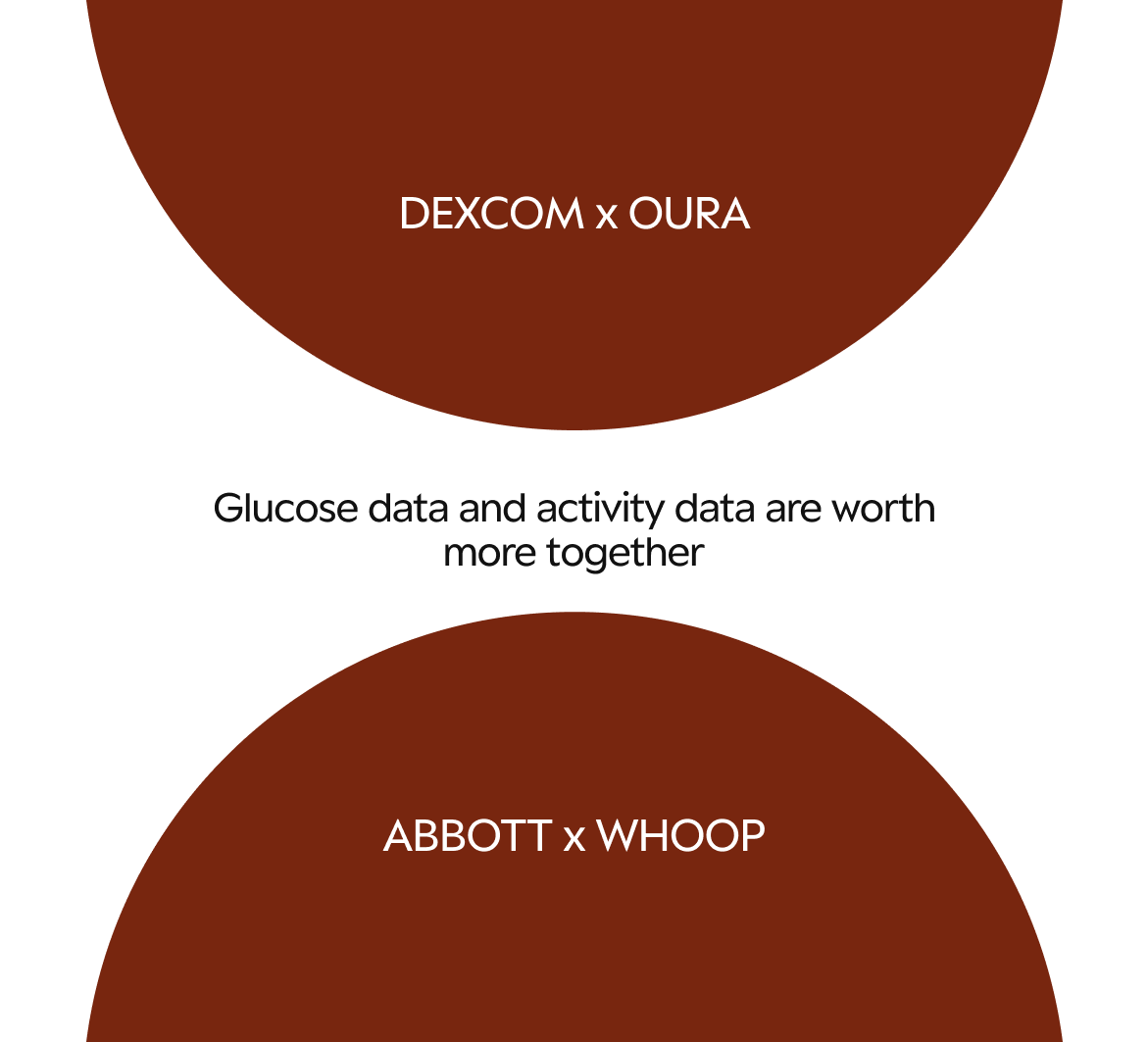
In 2024, Dexcom invested $75 million in Oura and agreed to begin integrating its glucose sensors with the ring. This year, Abbott joined Whoop’s $575 million round as a strategic investor, at a $10.1 billion valuation. Whoop’s CEO, Will Ahmed, described the Abbott partnership as a broader push into health and medical capabilities.
That two rivals made the same strategic move within a short time window is most likely not a coincidence but rather built on a belief that glucose data and activity data are worth far more together than apart. The convergence runs in both directions: (1) the CGM makers are pushing sensors into the consumer market (Abbott's Lingo, Dexcom's Stelo) and (2) wearables' activity data is proving useful for glucose management.
In 2024, Dexcom invested $75 million in Oura and agreed to begin integrating its glucose sensors with the ring. This year, Abbott joined Whoop’s $575 million round as a strategic investor, at a $10.1 billion valuation. Whoop’s CEO, Will Ahmed, described the Abbott partnership as a broader push into health and medical capabilities.
That two rivals made the same strategic move within a short time window is most likely not a coincidence but rather built on a belief that glucose data and activity data are worth far more together than apart. The convergence runs in both directions: (1) the CGM makers are pushing sensors into the consumer market (Abbott's Lingo, Dexcom's Stelo) and (2) wearables' activity data is proving useful for glucose management.
In 2024, Dexcom invested $75 million in Oura and agreed to begin integrating its glucose sensors with the ring. This year, Abbott joined Whoop’s $575 million round as a strategic investor, at a $10.1 billion valuation. Whoop’s CEO, Will Ahmed, described the Abbott partnership as a broader push into health and medical capabilities.
That two rivals made the same strategic move within a short time window is most likely not a coincidence but rather built on a belief that glucose data and activity data are worth far more together than apart. The convergence runs in both directions: (1) the CGM makers are pushing sensors into the consumer market (Abbott's Lingo, Dexcom's Stelo) and (2) wearables' activity data is proving useful for glucose management.
Two Giants With The Same Move
In 2024, Dexcom invested $75 million in Oura and agreed to begin integrating its glucose sensors with the ring. This year, Abbott joined Whoop’s $575 million round as a strategic investor, at a $10.1 billion valuation. Whoop’s CEO, Will Ahmed, described the Abbott partnership as a broader push into health and medical capabilities.
That two rivals made the same strategic move within a short time window is most likely not a coincidence but rather built on a belief that glucose data and activity data are worth far more together than apart. The convergence runs in both directions: (1) the CGM makers are pushing sensors into the consumer market (Abbott's Lingo, Dexcom's Stelo) and (2) wearables' activity data is proving useful for glucose management.
Two Giants With The Same Move
In 2024, Dexcom invested $75 million in Oura and agreed to begin integrating its glucose sensors with the ring. This year, Abbott joined Whoop’s $575 million round as a strategic investor, at a $10.1 billion valuation. Whoop’s CEO, Will Ahmed, described the Abbott partnership as a broader push into health and medical capabilities.
That two rivals made the same strategic move within a short time window is most likely not a coincidence but rather built on a belief that glucose data and activity data are worth far more together than apart. The convergence runs in both directions: (1) the CGM makers are pushing sensors into the consumer market (Abbott's Lingo, Dexcom's Stelo) and (2) wearables' activity data is proving useful for glucose management.
Two Giants With The Same Move
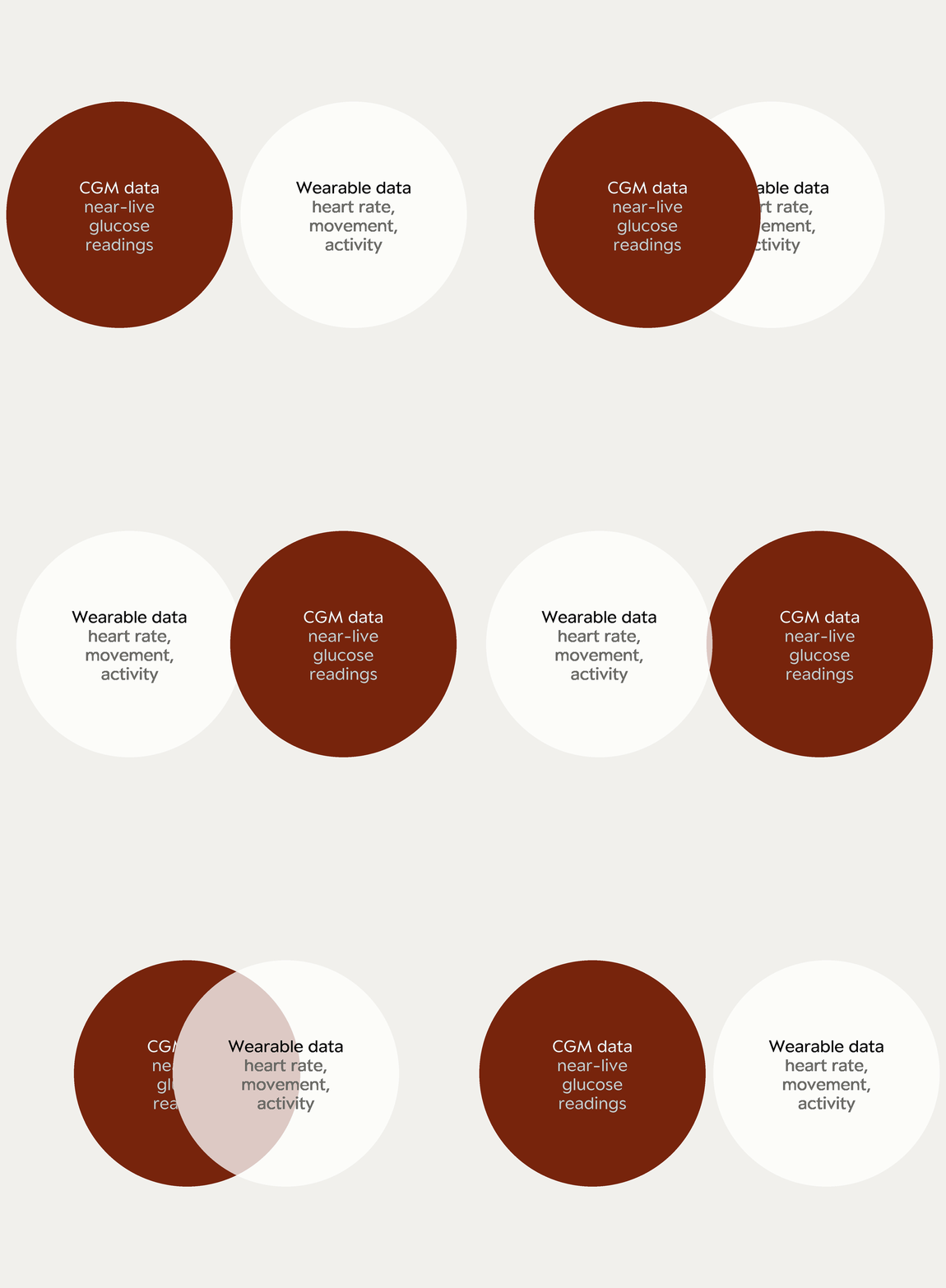
The two devices I’m using both have great data on the state of my health – the CGM providing near-live glucose data, and the consumer wearable giving insights on heart rate, stress levels, and activity. And while there is benefit in eventually having my glucose data included in my Whoop profile, the potential is much bigger than that.
Modern insulin pumps already connect with CGMs to semi-automatically dose insulin based on close-to-live blood sugar data. But, as most active diabetics know, physical activity is one of the biggest drivers of insulin effectiveness and blood sugar levels, and dangerous low-glucose events are far more likely when exercising.
Currently, auto-dosing insulin pumps are largely blind to this driver. The more advanced ones offer a manually triggered “activity mode” that reduces insulin for a period. This works, but the burden still lies entirely on the user, who has to actively remember to switch it on (something I forget before a run more often than I’d like to admit). Research shows that, even after the introduction of semi-automatic systems, more than 20% of diabetics still suffer from diabetes distress, stemming from the mental load of constantly having to manage blood glucose levels.
The big potential lies in closing this gap. Imagine a system that reads heart rate, movement, and activity patterns to adjust insulin before glucose starts to fall. Anticipation is the point, because once insulin is delivered, it cannot be recalled. The potential of this is not hypothetical – researchers are already feeding heart rate and movement data into automated insulin delivery to reduce dangerous lows during exercise, with no action from the user.
The two devices I’m using both have great data on the state of my health – the CGM providing near-live glucose data, and the consumer wearable giving insights on heart rate, stress levels, and activity. And while there is benefit in eventually having my glucose data included in my Whoop profile, the potential is much bigger than that.
Modern insulin pumps already connect with CGMs to semi-automatically dose insulin based on close-to-live blood sugar data. But, as most active diabetics know, physical activity is one of the biggest drivers of insulin effectiveness and blood sugar levels, and dangerous low-glucose events are far more likely when exercising.
Currently, auto-dosing insulin pumps are largely blind to this driver. The more advanced ones offer a manually triggered “activity mode” that reduces insulin for a period. This works, but the burden still lies entirely on the user, who has to actively remember to switch it on (something I forget before a run more often than I’d like to admit). Research shows that, even after the introduction of semi-automatic systems, more than 20% of diabetics still suffer from diabetes distress, stemming from the mental load of constantly having to manage blood glucose levels.
The big potential lies in closing this gap. Imagine a system that reads heart rate, movement, and activity patterns to adjust insulin before glucose starts to fall. Anticipation is the point, because once insulin is delivered, it cannot be recalled. The potential of this is not hypothetical – researchers are already feeding heart rate and movement data into automated insulin delivery to reduce dangerous lows during exercise, with no action from the user.
The two devices I’m using both have great data on the state of my health – the CGM providing near-live glucose data, and the consumer wearable giving insights on heart rate, stress levels, and activity. And while there is benefit in eventually having my glucose data included in my Whoop profile, the potential is much bigger than that.
Modern insulin pumps already connect with CGMs to semi-automatically dose insulin based on close-to-live blood sugar data. But, as most active diabetics know, physical activity is one of the biggest drivers of insulin effectiveness and blood sugar levels, and dangerous low-glucose events are far more likely when exercising.
Currently, auto-dosing insulin pumps are largely blind to this driver. The more advanced ones offer a manually triggered “activity mode” that reduces insulin for a period. This works, but the burden still lies entirely on the user, who has to actively remember to switch it on (something I forget before a run more often than I’d like to admit). Research shows that, even after the introduction of semi-automatic systems, more than 20% of diabetics still suffer from diabetes distress, stemming from the mental load of constantly having to manage blood glucose levels.
The big potential lies in closing this gap. Imagine a system that reads heart rate, movement, and activity patterns to adjust insulin before glucose starts to fall. Anticipation is the point, because once insulin is delivered, it cannot be recalled. The potential of this is not hypothetical – researchers are already feeding heart rate and movement data into automated insulin delivery to reduce dangerous lows during exercise, with no action from the user.
Anticipation Is The Point
The two devices I’m using both have great data on the state of my health – the CGM providing near-live glucose data, and the consumer wearable giving insights on heart rate, stress levels, and activity. And while there is benefit in eventually having my glucose data included in my Whoop profile, the potential is much bigger than that.
Modern insulin pumps already connect with CGMs to semi-automatically dose insulin based on close-to-live blood sugar data. But, as most active diabetics know, physical activity is one of the biggest drivers of insulin effectiveness and blood sugar levels, and dangerous low-glucose events are far more likely when exercising.
Currently, auto-dosing insulin pumps are largely blind to this driver. The more advanced ones offer a manually triggered “activity mode” that reduces insulin for a period. This works, but the burden still lies entirely on the user, who has to actively remember to switch it on (something I forget before a run more often than I’d like to admit). Research shows that, even after the introduction of semi-automatic systems, more than 20% of diabetics still suffer from diabetes distress, stemming from the mental load of constantly having to manage blood glucose levels.
The big potential lies in closing this gap. Imagine a system that reads heart rate, movement, and activity patterns to adjust insulin before glucose starts to fall. Anticipation is the point, because once insulin is delivered, it cannot be recalled. The potential of this is not hypothetical – researchers are already feeding heart rate and movement data into automated insulin delivery to reduce dangerous lows during exercise, with no action from the user.
Anticipation Is The Point
The two devices I’m using both have great data on the state of my health – the CGM providing near-live glucose data, and the consumer wearable giving insights on heart rate, stress levels, and activity. And while there is benefit in eventually having my glucose data included in my Whoop profile, the potential is much bigger than that.
Modern insulin pumps already connect with CGMs to semi-automatically dose insulin based on close-to-live blood sugar data. But, as most active diabetics know, physical activity is one of the biggest drivers of insulin effectiveness and blood sugar levels, and dangerous low-glucose events are far more likely when exercising.
Currently, auto-dosing insulin pumps are largely blind to this driver. The more advanced ones offer a manually triggered “activity mode” that reduces insulin for a period. This works, but the burden still lies entirely on the user, who has to actively remember to switch it on (something I forget before a run more often than I’d like to admit). Research shows that, even after the introduction of semi-automatic systems, more than 20% of diabetics still suffer from diabetes distress, stemming from the mental load of constantly having to manage blood glucose levels.
The big potential lies in closing this gap. Imagine a system that reads heart rate, movement, and activity patterns to adjust insulin before glucose starts to fall. Anticipation is the point, because once insulin is delivered, it cannot be recalled. The potential of this is not hypothetical – researchers are already feeding heart rate and movement data into automated insulin delivery to reduce dangerous lows during exercise, with no action from the user.
Anticipation Is The Point
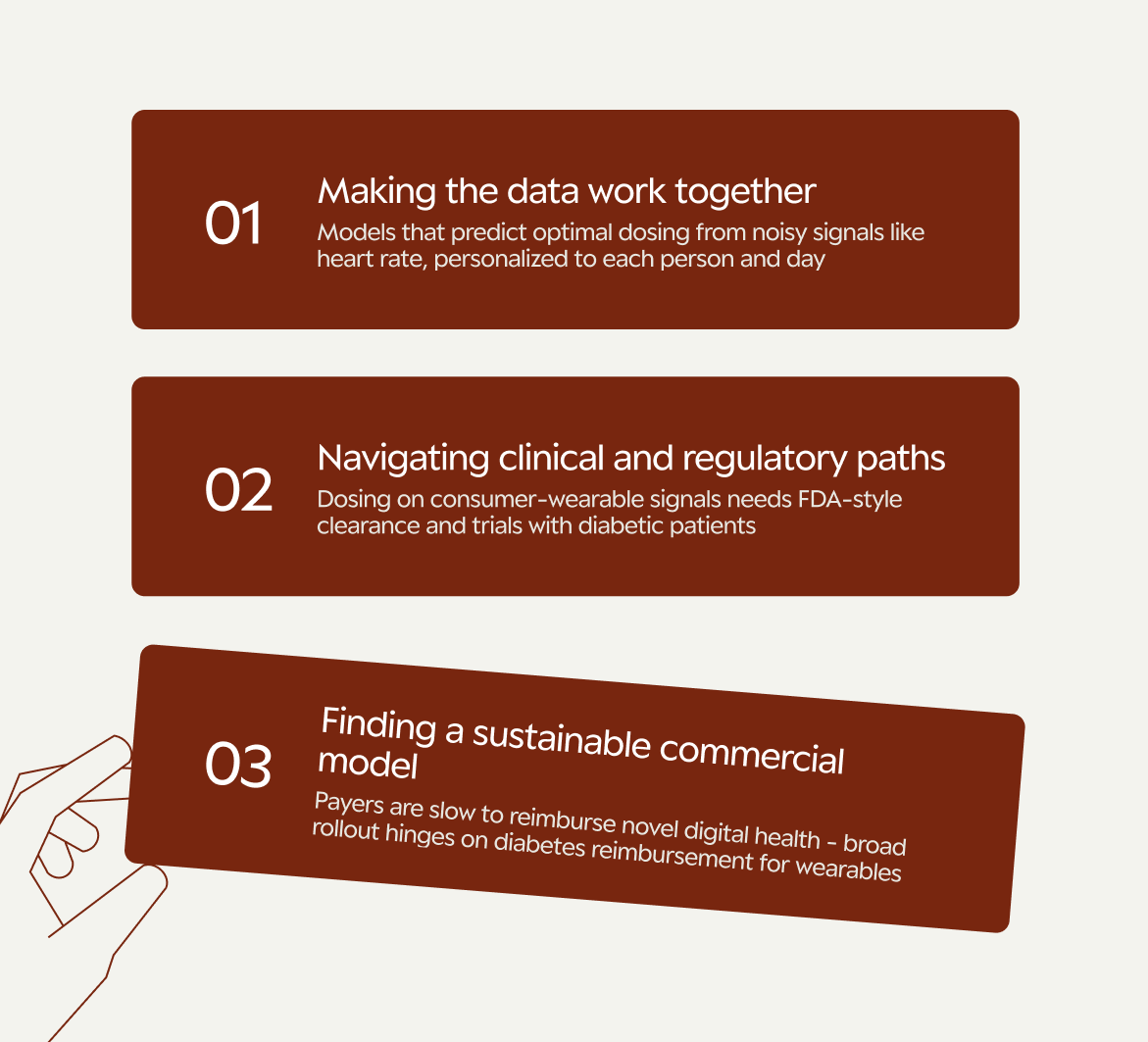
While the CGM x consumer wearable partnerships ease data sharing, there are still three major challenges that need to be addressed for this to make a difference to patients:
1. Making the data work together: Building algorithms and ML models that predict optimal dosing based on noisy signals (such as heart rate) – personalized to account for the highly person- and day-specific glucose responses to activity – is technically challenging.
2. Navigating clinical and regulatory challenges: A system that doses insulin based on noisy consumer wearable signals needs FDA clearance (or equivalent), which requires trials with diabetic patients.
3. Finding a sustainable commercial model: Who pays? In many cases, promising solutions die because payers are slow to reimburse novel digital health solutions – and in this case, broad roll-out would hinge on obtaining diabetes reimbursement for wearables.
These challenges should not be considered separate. Before a single model is built, you need to anticipate what regulators will need to see to clear it and what payers will need to see to reimburse it – and this should guide the data you collect from day one. On the regulator side, it most likely means designing trials around endpoints like time-in-range, reduction in time spent in low blood sugar, and fewer severe low blood sugar events during and after exercise. On the payer side, it means capturing real-world evidence such as fewer emergency room visits and hospitalizations tied to activity-induced lows, and ideally a proven reduction of downstream complications or diabetes distress – something a payer would be able to put a number on. If the data and modeling setup is not designed to produce these kinds of figures, it will be hard to gain approval or reimbursement.
While the CGM x consumer wearable partnerships ease data sharing, there are still three major challenges that need to be addressed for this to make a difference to patients:
1. Making the data work together: Building algorithms and ML models that predict optimal dosing based on noisy signals (such as heart rate) – personalized to account for the highly person- and day-specific glucose responses to activity – is technically challenging.
2. Navigating clinical and regulatory challenges: A system that doses insulin based on noisy consumer wearable signals needs FDA clearance (or equivalent), which requires trials with diabetic patients.
3. Finding a sustainable commercial model: Who pays? In many cases, promising solutions die because payers are slow to reimburse novel digital health solutions – and in this case, broad roll-out would hinge on obtaining diabetes reimbursement for wearables.
These challenges should not be considered separate. Before a single model is built, you need to anticipate what regulators will need to see to clear it and what payers will need to see to reimburse it – and this should guide the data you collect from day one. On the regulator side, it most likely means designing trials around endpoints like time-in-range, reduction in time spent in low blood sugar, and fewer severe low blood sugar events during and after exercise. On the payer side, it means capturing real-world evidence such as fewer emergency room visits and hospitalizations tied to activity-induced lows, and ideally a proven reduction of downstream complications or diabetes distress – something a payer would be able to put a number on. If the data and modeling setup is not designed to produce these kinds of figures, it will be hard to gain approval or reimbursement.
While the CGM x consumer wearable partnerships ease data sharing, there are still three major challenges that need to be addressed for this to make a difference to patients:
1. Making the data work together: Building algorithms and ML models that predict optimal dosing based on noisy signals (such as heart rate) – personalized to account for the highly person- and day-specific glucose responses to activity – is technically challenging.
2. Navigating clinical and regulatory challenges: A system that doses insulin based on noisy consumer wearable signals needs FDA clearance (or equivalent), which requires trials with diabetic patients.
3. Finding a sustainable commercial model: Who pays? In many cases, promising solutions die because payers are slow to reimburse novel digital health solutions – and in this case, broad roll-out would hinge on obtaining diabetes reimbursement for wearables.
These challenges should not be considered separate. Before a single model is built, you need to anticipate what regulators will need to see to clear it and what payers will need to see to reimburse it – and this should guide the data you collect from day one. On the regulator side, it most likely means designing trials around endpoints like time-in-range, reduction in time spent in low blood sugar, and fewer severe low blood sugar events during and after exercise. On the payer side, it means capturing real-world evidence such as fewer emergency room visits and hospitalizations tied to activity-induced lows, and ideally a proven reduction of downstream complications or diabetes distress – something a payer would be able to put a number on. If the data and modeling setup is not designed to produce these kinds of figures, it will be hard to gain approval or reimbursement.
How To Get There
While the CGM x consumer wearable partnerships ease data sharing, there are still three major challenges that need to be addressed for this to make a difference to patients:
1. Making the data work together: Building algorithms and ML models that predict optimal dosing based on noisy signals (such as heart rate) – personalized to account for the highly person- and day-specific glucose responses to activity – is technically challenging.
2. Navigating clinical and regulatory challenges: A system that doses insulin based on noisy consumer wearable signals needs FDA clearance (or equivalent), which requires trials with diabetic patients.
3. Finding a sustainable commercial model: Who pays? In many cases, promising solutions die because payers are slow to reimburse novel digital health solutions – and in this case, broad roll-out would hinge on obtaining diabetes reimbursement for wearables.
These challenges should not be considered separate. Before a single model is built, you need to anticipate what regulators will need to see to clear it and what payers will need to see to reimburse it – and this should guide the data you collect from day one. On the regulator side, it most likely means designing trials around endpoints like time-in-range, reduction in time spent in low blood sugar, and fewer severe low blood sugar events during and after exercise. On the payer side, it means capturing real-world evidence such as fewer emergency room visits and hospitalizations tied to activity-induced lows, and ideally a proven reduction of downstream complications or diabetes distress – something a payer would be able to put a number on. If the data and modeling setup is not designed to produce these kinds of figures, it will be hard to gain approval or reimbursement.
How To Get There
While the CGM x consumer wearable partnerships ease data sharing, there are still three major challenges that need to be addressed for this to make a difference to patients:
1. Making the data work together: Building algorithms and ML models that predict optimal dosing based on noisy signals (such as heart rate) – personalized to account for the highly person- and day-specific glucose responses to activity – is technically challenging.
2. Navigating clinical and regulatory challenges: A system that doses insulin based on noisy consumer wearable signals needs FDA clearance (or equivalent), which requires trials with diabetic patients.
3. Finding a sustainable commercial model: Who pays? In many cases, promising solutions die because payers are slow to reimburse novel digital health solutions – and in this case, broad roll-out would hinge on obtaining diabetes reimbursement for wearables.
These challenges should not be considered separate. Before a single model is built, you need to anticipate what regulators will need to see to clear it and what payers will need to see to reimburse it – and this should guide the data you collect from day one. On the regulator side, it most likely means designing trials around endpoints like time-in-range, reduction in time spent in low blood sugar, and fewer severe low blood sugar events during and after exercise. On the payer side, it means capturing real-world evidence such as fewer emergency room visits and hospitalizations tied to activity-induced lows, and ideally a proven reduction of downstream complications or diabetes distress – something a payer would be able to put a number on. If the data and modeling setup is not designed to produce these kinds of figures, it will be hard to gain approval or reimbursement.
How To Get There
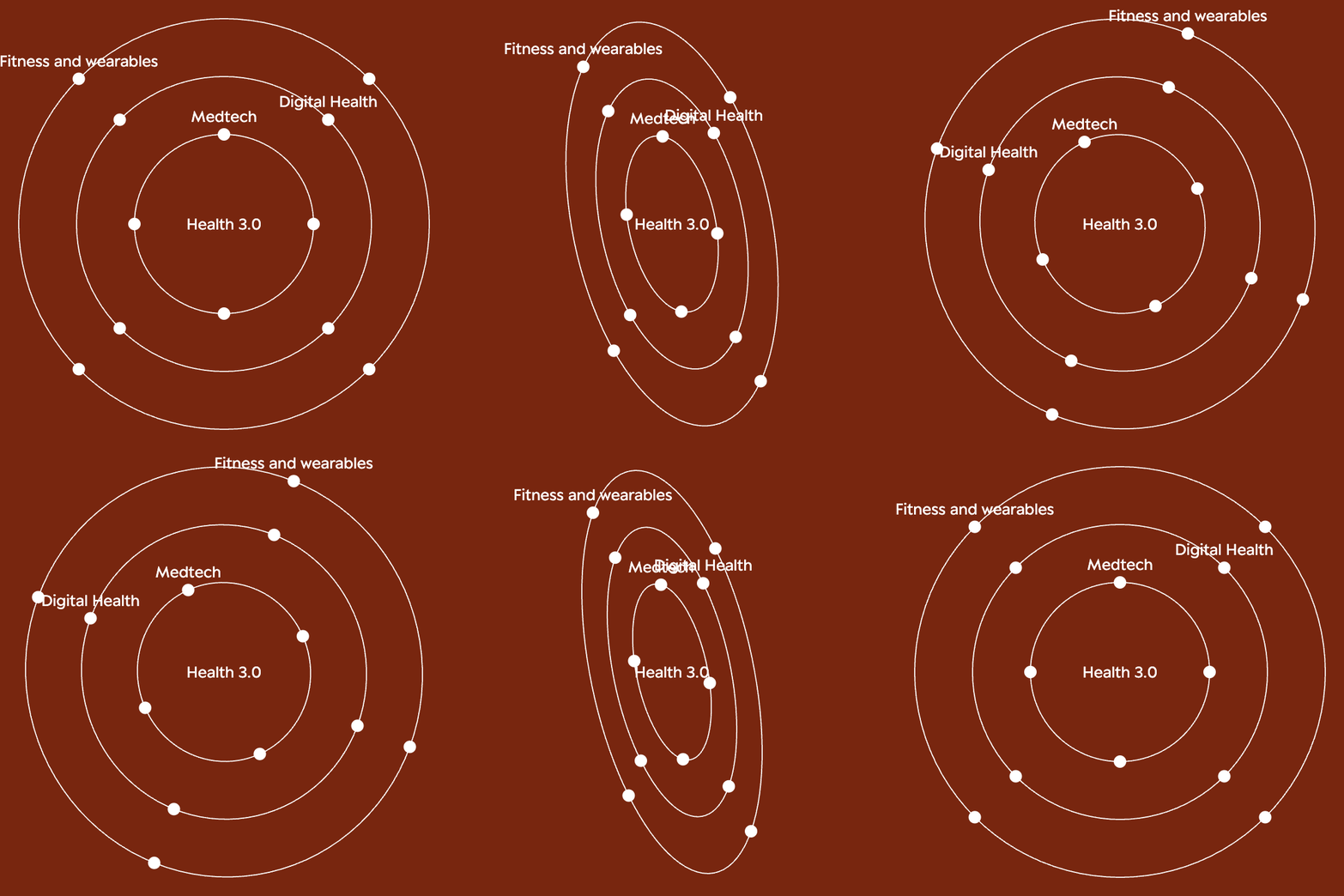
This is one example of a much broader Health 3.0 movement, and it’s exactly the type of challenge we’re excited about at Intellishore. Across the health ecosystem, separate functions and players are converging to enable more personalized and preventive care rooted in data. To succeed, you must make different signals work together, navigate the clinical and regulatory requirements, develop a sustainable commercial model, and address these challenges as a connected problem.
This is one example of a much broader Health 3.0 movement, and it’s exactly the type of challenge we’re excited about at Intellishore. Across the health ecosystem, separate functions and players are converging to enable more personalized and preventive care rooted in data. To succeed, you must make different signals work together, navigate the clinical and regulatory requirements, develop a sustainable commercial model, and address these challenges as a connected problem.
This is one example of a much broader Health 3.0 movement, and it’s exactly the type of challenge we’re excited about at Intellishore. Across the health ecosystem, separate functions and players are converging to enable more personalized and preventive care rooted in data. To succeed, you must make different signals work together, navigate the clinical and regulatory requirements, develop a sustainable commercial model, and address these challenges as a connected problem.
A Part Of A Broader Movement
This is one example of a much broader Health 3.0 movement, and it’s exactly the type of challenge we’re excited about at Intellishore. Across the health ecosystem, separate functions and players are converging to enable more personalized and preventive care rooted in data. To succeed, you must make different signals work together, navigate the clinical and regulatory requirements, develop a sustainable commercial model, and address these challenges as a connected problem.
A Part Of A Broader Movement
This is one example of a much broader Health 3.0 movement, and it’s exactly the type of challenge we’re excited about at Intellishore. Across the health ecosystem, separate functions and players are converging to enable more personalized and preventive care rooted in data. To succeed, you must make different signals work together, navigate the clinical and regulatory requirements, develop a sustainable commercial model, and address these challenges as a connected problem.
A Part Of A Broader Movement
The whitepaper breaks down the full governance model: intake and prioritization criteria, decision rights, funding models, a value framework covering financial, capacity, and risk outcomes, and the kill triggers that let leaders stop work without stigma.

Reach out to talk more.
The next leap in diabetes care won't come from more data – it'll come from connecting it. Let's talk about what that means for you

In this article, we outline why effective data governance starts with ownership, not tools - and how organizations can build the structures that make data trustworthy and scalable.
Click to read more
In this article, we explore why the blockbuster era is giving way to a more fragmented, competitive landscape - and how machine learning is changing the way life science companies predict erosion, time investments, and launch with precision.
Click to read more
In this article we give our point of view on how healthcare organizations can design a scalable content engine with local flexibility for impactful customer engagement - and how to succeed where other organizations typically fail.
Click to read more
In this perspective on Build vs Buy in AI, we share how to move beyond a buy-only mindset by designing AI around your processes and competitive edge. We explore why off-the-shelf works well in domains where correctness and compliance matter most, why you need more ownership in use cases that drive differentiation, and how a hybrid approach - buying the base and building the system around it - keeps operations stable while still enabling you to stand out.
Click to read more